Showing posts with label 2000s. Show all posts

Tuesday, 2 October 2007

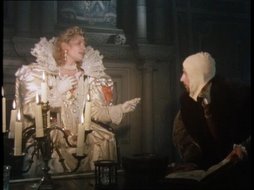
Finding Neverland (2004) - Marc Forster


The key word here is competent. There is nothing specifically bad about Marc Forster's film, it's just there's nothing particularly exceptional about it either. Depp and Winslet phone in reasonable performances while Forster does the minimum with the material provided to produce a film which, although not in the least bit dull, doesn't ever amount to something that feels wholly satisfactory.

The story follows J.M. Barrie as, under the pressure of critical slatings of his latest plays, he immerses himself in the world of Sylvia Davies' children - one of whom becomes the boy upon whom the character of Peter Pan is based. All this going on while - unbeknownst to the family, Silvia is desperately ill following the passing on of her husband. Backed by a financier at the end of his tether, with more money than sense, the Peter Pan story conjures itself in the head of Mr Barrie heavily inspired by the children with which he so closely associates. There is a brief mention of the rumours circulating that something untoward is going on between the playwright and the kids, but in this family film such talk is presented as bitter cynicism by prying eyes and stuffy-nosed high society who don't take kindly to breaking the mould. By contrast Barrie's unconventional production is presented here as something of a brainwave, a revolution in the medium, something which pushes art forward upon a broader audience socially as much as artistically.

It's all very neat, yet unavoidably shallow. The film never even seems interested in the whys and wherefores behind Mr Barrie's relationship to the children beyond him being genuinely kind of heart, and any sexual chemistry between him and Silvia is underplayed to the point of non-existence. We learn next to nothing of Barrie's background, nor what happens after the play's performance. Ultimately, I'm afraid Forster wants to turn this interesting drama-come-fantasy into a tear-jerking family drama about love, but the underdeveloped characters of the children and Silvia left me, in the final reel, simply wondering "is that it?". Was the play a cathartic way of dealing with the mother's illness for the children; did Barrie intend it that way or was this merely co/incidental? Forster, apparently, doesn't care as long as the music stirs on the right queue and every negative shot is followed by a cosy, nice one.

It's a safe watch, that veers clear of tedium, but does nothing to linger in the memory for more than about 30 seconds after the credits have expired. Taking Monster's Ball into account, Mr Forster must do better next time IMHO.

5/10

Monday, 3 September 2007

Azumi (2003) - Ryuhei Kitamura


Not a great film by any stretch of the imagination, Azumi is a simple story told fairly well with plenty of fighting and blood-spilling thrown in to keep the audience entertained. The story is essentially one of assassins being sent out into the world to kill bad men, only to start questioning their actions when they come across nice people and witness innocents being slain. I could probably throw in a quote here about how along with great power comes responsibility, only in Azumi the assassins have no responsibilities, are are actively encouraged not to feel guilt. Azumi herself, is the only woman in the group, the fastest and most talented of all of them it is abundantly clear from the first reel that she is the one who will save the day in the end.

Considering the body-count (very high - 3 figures at least), explosions and other sorts of violence it's surprising that such a film could be as dull and boring as this. The dialogue is monotonous and - for the mostpart - the editing of the action scenes is choppy beyond distraction, throw in far far too much slow motion and an awful electric guitar soundtrack and the whole thing gets quite annoying very quickly indeed. There's not much required of the actors here, other than to talk solemnly and fight - which is a pity because one or two hint at some genuine talent.

With cliché compounding cliché, and no blood-letting we haven't already seen before in Kill Bill i wouldn't recommend this to anyone. There are much, much better Samurai flicks out there, and much better Japanese film-makers too.

5/10

Monday, 2 July 2007

L'Amico Di Famiglia (2006) - Paolo Sorrentino


In Family Friend, a wonderful recent Italian film Giacomo Rizzo plays Geremia De Geremei. Geremia is an old man, a tailor with a rather repulsive appearance who lives in a run-down apartment with his ageing sickly mother. He seems nice - people come to him for advice, money help and lots of people seem to like him. The poor old guy couldn't harm a fly, the moment you see him you want to put your arm round the quaint old fella and tell him everything is going to be alright (though you'd have to say it in Italian as he doesn't speak English). This impression lasts for about 15 minutes or so, maybe less, before it's revealed he's a lone shark who charges 100% interest on all monies lent. But what can and old man like this do if someone doesn't pay? Well he employs some rather burly twins to get the money, or something of equal value out of his customers. He's "a friend of the family" to everyone because no one wants to admit who he really is to others, or that they need his help. The film itself revolves largely around a father who can't afford his daughter's wedding, so he goes to Geremia to get the money for the wedding. Soon after the money has been lent, Geremia gets an offer from a businessman who needs a million Euros (that means 2 million repaid to Geremia - enough to set him up for life). Between the businessman, Geremia, the father and the gorgeous bride-to-be who will do anything to lower her father's repayments things get messy very quickly for all involved; all the while Geremia's one true friend in the world - a man with a penchant for line dancing and country music with a dream of moving to the US, offers him a friendly shoulder to rest on and some sound advice.


This wonderfully shot film, captured largely in dark orange tones that bring a sense of Mediterranean warmth with a suspicious edge to the frame, seems to be all about friendship, and what constitutes "real" friendship. Geremia has lots of 'friends', but like the dealer in Patrice Leconte's My Best Friend they are only in actuality business acquaintances. People respect Geremia because they fear him, and no matter how nice he tries to be to them they will always resent hi and the power he holds over them - even if he will never understand this because of his delusion that he is liked by these people. Why he doesn't seem to spend any of the money he makes (he keeps it all in a safety deposit box), and whether he was a loner before he was a lone shark aren't fully explained. It seems to be down to a very conservative, prudent outlook on life as well as his domineering mother who rules his life from her bed and his absent father who brought him up to be a lone shark. His only real friend might not be his country music-loving accomplice, but 'The Pirate' - a competing loan shark who may or may not exist, but in Geremia's world he certainly exists, and is probably the only person who can truly understand Geremia's situation.


The acting is as wonderful as the cinematography, Giacomo Rizzo is perfect in the lead while Laura Chiatti exudes sultry European sex appeal from every pore of her skin (even when her dancing leaves a little to be desired we still [i]want[/i] her as much as Geremia does). The editing of the music, the production design... it all comes together cleanly and crisply to elucidate a very unique vision of a seedier side to contemporary Italian existence outside of the major cities. In the end not all is answered, though nor should it be for this film - as it stands - is [i]very[/i] good and in the first 30 minutes or so, touches on genuine greatness where it an irresistible sense of power is attained. Let down only slightly by the con story that comes to the fore in the film's ending, the emotional complexity involved in trying to de-construct the film's protagonists is something not seen that often in cinema these days. Sorrentino refuses to paint a landscape of good guys and bad guys, he refuses to explain why nice people do bad things and he refuses (for the most-part) to give into stereotype and cliché (there is one wonderful scene in which we think Geremia is going to sexually assault a client, before it turns out that is not what he is after at all). A brilliant theatrical experience; a film i will probably try to revisit when it comes out on dvd.

7 leaning towards 8/10

Tuesday, 19 June 2007

Comédie de l'innocence (2000) - Raoul Ruiz


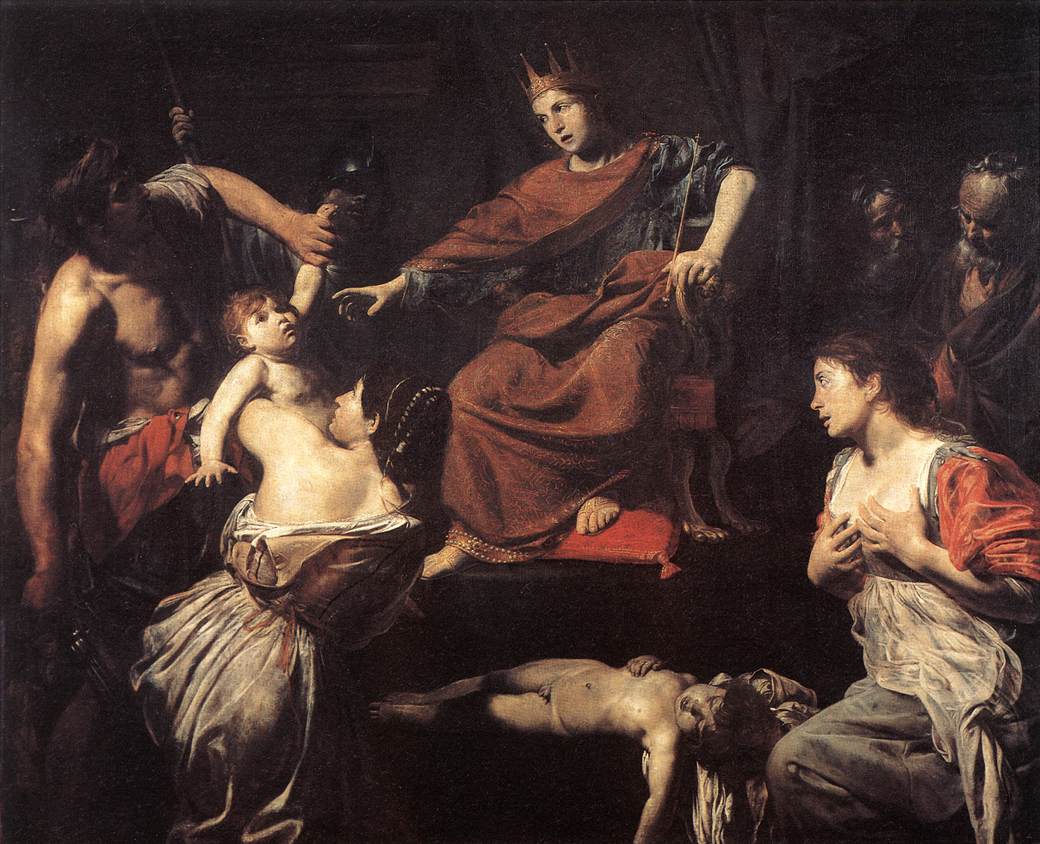
The Judgement Of Solomon: I Kings iii 16-28

Then came there two women, that were harlots, unto the king, and stood before him.
And the one woman said, O my lord, I and this woman dwell in one house; and I was delivered of a child with her in the house. And it came to pass the third day after that I was delivered, that this woman was delivered also: and we were together; there was no stranger with us in the house, save we two in the house. And this woman's child died in the night; because she overlaid it. And she arose at midnight, and took my son from beside me, while thine handmaid slept, and laid it in her bosom, and laid her dead child in my bosom. And when I rose in the morning to give my child suck, behold, it was dead: but when I had considered it in the morning, behold, it was not my son, which I did bear.
And the other woman said, Nay; but the living is my son, and the dead is thy son.
And this said, No; but the dead is thy son, and, the living is my son.
Thus they spake before the king.
Then said the king, The one saith, This is my son that liveth, and thy son is the dead and the other saith, Nay; but thy son is the dead, and my son is the living. And the king said, Bring me a sword.
And they brought a sword before the king.
And the king said, Divide the living child in two, and give half to the one, and half to the other.
Then spake the woman whose the living child was unto the king, for her bowels yearned upon her son, and she said, O my lord, give her the living child, and in no wise slay it.
But the other said, Let it be neither mine nor thine, but divide it.
Then the king answered and said, Give her the living child, and in no wise slay it she is the mother thereof.
And all Israel heard of the judgment which the king had judged; and they feared the king: for they saw that the wisdom of God was in him, to do judgement.


Antonio Machado: Is this the house where we cut innocents' throats?
No, here we just cut throats.


The Film:


Ruiz's Comedy Of Innocence, based upon Massimo Bontempelli's novella Il Figlio Di Due Madri, quickly emerges as a riddle, wrapped in an enigma shrouded in mystery. What at first seems to be a fairly straight forward tale of mistaken identity soon becomes something far more dense, far more perceptive and - far more interesting. As the director has stated, the film's narrative and the events within that narrative have an explanation but that explanation doesn't actually explain anything. Throwing the audience's perceptions of reality is one thing, but to do so in quite the controlled manner demonstrated here by Ruiz really is something quite extraordinary indeed. So, where to start with analysing such a superb piece of film making?


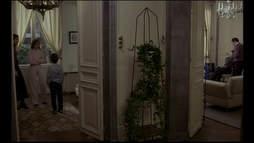
The story revolves around a comfortable bourgeois Parisian family, played by Isabelle Huppert, Charles Berling, Denis Podalydès and Nils Hugon - plus the nanny (Laure de Clermont-Tonnerre). This family enjoy their life surrounded by [mainly artistic] luxuries, Huppert is a theatrical designer who paints in her spare time and Podalydès is a businessman who spends a lot of his time travelling leaving his medical brother, Serge (Charles Berling) to look out for his family. Everything is going as per usual whe one day the young boy, Camille, starts behaving strangely. Strange behavious is not unusual for a 10 year old boy but Camille then claims that's not his name before taking his mother to a house in a part of Paris he's never visited before, claiming it to be his "real home" - then, we meet Isabella (Jeanne Balibar) who the boy claims is his real mother. Ariane (Huppert) invites Isabella to stay in their house while she figures out what is wrong with her son, hoping perhaps that medically-trained professional Serge might be able to cure whatever it is that is happening to him. During this time Camille has decided his name is in fact Paul - the name of Isabella's deceased son who also happened to be born on the same day as Camille, which raises the question for all involved, "Is Camille really Paul?". In the end a resolution of sorts, is reached although it still leaves many questions unanswered (almost certainly Ruiz's intention).


Perhaps the most interesting aspect of the film, is that it can be conceived of as a ghost story with no ghosts. Be it for Gallic traditional reasons, economic reasons or otherwise it is noted by the director on the Region 2 dvd that the French don't tend to make ghost films like some other countries do/have done. Camille has a friend, Alexandre, who may be imaginary, may be a ghost, or may actually exist in real life. Likewise, when we find out about the accident that supposedly killed Paul, there is enough left unsaid to suggest that there's a possibility that Camille could be Paul, in which case he would in effect be a living ghost - a boy who died but who is alive. The comfortable, expansive, bourgeois Parisian house in which most of the film takes place itself becomes a character in the film. Beyond the strange sounds there is a creepy, disturbing over-abundance of busts filling the mantelpieces and shelves of the interior, more than that however, as the film progresses the statues move to face in different directions.


It's easily missed at first but on watching the film again it's quite noticeable that between scenes they move to look towards people or objects in the house - the most obvious example of which is when one of the paintings hanging in the house inexplicably changes from a portrait to The Judgement Of Solomon; suddenly the statues in the room are all looking at the painting. There are other little things too - the way the camera pre-empts the movements of the characters as if the house knows what they are going to do, and then there are the strange sounds, sounds that don't match what is actually happening on-screen the most common of which is the rushing of water we hear when there is no water around.


Water, the ebb and flow of which, seems to form one of the central themes of the film. Be it the bizarre blue colours that afflicts some of the abstract images Camille films on his camera, or simply the way he holds his camera above the dinner table like a periscope rising from a submarine there is water running through this film. In one rather shocking scene the image itself warps and goes a blue tint as Camille invites his uncle to "come into the deep water" with him. It turns out there are quite literal reasons for this aquatic feel - the boy Paul drowned when he fell from a barge on The Seine, but beyond this water has always had connotations of femininity (see Polanski's Knife in The Water for some not-so-subtle sexual symbolism involving water) and this is a film that very much deals with concepts of femininity and womanhood.


The film is filled with shots of flowing water that both mirror the fluid nature of the plot's development and suggest or hint at the emotional turbulence that could come. One angle of the film is that maternity, or the maternal instinct at least is as dangerous when array as any other force in nature, likewise water can be safe but with certain currents and eddies people can quickly find themselves impossibly submerged without oxygen; it's easy to quickly lose your bearings underwater. All of these notions come to the fore towards the film's climax with an emotionally shattered, desperate Isabelle Huppert sat in her garden on a chair with Camille/Paul running around her with his camera: all we can hear is the sound of rushing water.


I think it is the maternal elements of the film, and the other human relationships within it that form the crux of the masterpiece. On the face of it you could look at the film and see that the boy is lonely, that his rich mother (Huppert) doesn't love him, that the nanny who is always hovering in the background is more of a mother to him than his real one and that his 'new' mother gives him the love and affection he has craved for so long. Life isn't that simple though, and nor is the film. The nanny is having an affair with Serge (the boy's uncle), when Isabella arrives on the scene it's not too long before she too tries to seduce Serge - is this trying to suggest the two women are very similar? Certainly the nanny seems to resent Isabella's presence as it seems to impede her own maternal instincts; the nanny always carries a doll of a little girl around with her - again suggesting maternal issues relating to childhood.


Indeed, a psychologist could watch the film and see the father abandoning his child to go on business, but with Serge fulfilling the father-figure role for the majority of the film that doesn't quite explain what's happening or why. Serge himself is interesting because while he's clearly an adult, he gets very angry when he sees Camille playing with his toy cars - he doesn't quite throw a childish tantrum but you can see one brewing in his eyes. Having said [above] that Huppert's character doesn't love her son enough that patently isn't true - her hurt both physically and emotionally as her child rejects her is palpable; few actors can do torment like Isabelle Huppert and in the film even she really excels herself. Does perhaps the boy Camille feel he's been abandoned by his parents, maybe because he spends all his time with the nanny and his father usually only talks when telling him off? It's unlikely as we see they do spend a reasonable amount of time together as a family and get on with each other as well as any family unit can be expected to.


It's this that really makes the film so brilliant in my mind - at first it's straight forward but the more you try to unravel the plot and the inter-relationships of the characters the more unfathomable it becomes. The way that Ruiz has thought through every aspect of the film-making process from the editing (there's a noticeable absence of shot/reverse shot cutting) to the sound (water, sound of footsteps etc) to the way each shot is framed beautifully with luxurious tracking and panning movements is simply a feast for any cinephile to behold, and it's all capped off with some incredible performances and, her, i ave to say the crème de la crème is Jeanne Balibar as the invasive but seemingly innocent Isabella. A uniquely fantastic film, instantly rewatchable.

9/10

Thursday, 19 April 2007

Les Amants réguliers (2005) - Philippe Garrel


There is another short clip from this film on youtube HERE

I'm not going to write much on this film, not much at all - i just felt i had to blog an entry on how, more than a film, Garrel's 180 minute mélange is an endurace test of the highest order. Seriously: people who make it through all three hours of this abysmal work in one sitting deserve some congratulations and - preferably - a medal.

Set in 1968 Paris it's really not clear what this film is actually about, who it's about, what they do, or why. Stuff happens - albeit sporadically - but as we never really get to know any of the characters it becomes impossible to care about any of the events occuring onscreen. I'm sure there are thick layers or visual metaphor and symbolism, and undoubtedly the film is filled with references to the nouvelle vague (even if the film's style itself seemed closer to Italian neo-realism) plus messages on the nature of artists and politics but for me it remains the embodiment of the arty, pretentious crap that puts so many people off foreig cinema.

There are many many better ways to spend three hours than watch the awful Regular Lovers.

My advice: watch Prima Della Rivoluzione or The Dreamers instead.

Tuesday, 27 March 2007

Sorstalanság (2005) - Lajos Koltai


Fateless, the directoral debut from Hungarian cinematographer Lajos Koltai stars Marcell Nagy as György, a Jewish teenager from Budapest who bares witness to the full horrors of the holocaust, first hand. Initially shielded from the truth by his family (who likely aren't fully aware of what's going on themselves) when his father is sent away to a labour camp, György soon follows along with other Jewish children (all of whom have passes). He is first sent to Auschwitz where he survives merely by lieing about his age; from there he is sent on to several labour camps including Buchenwald where his spirit is broken as he finds himself alienated by Yiddish-speaking Jews and Gypsies. His soul is broken, body shattered and yet with the liberation of the camps (featuring an appearance by Daniel Craig as an American GI) the boy, who has long-since grown into a man, manages not only to find hope in the future but a wistful longing for the time when he was in the camps.


Technically-speaking the film is a highly impressive piece of visual art - the outstanding use of filters that give the film a dated, sepia-like tone echoing the narrative's pervading sense of melancholy is rarely less than sublime. Likewise the way the visuals drift, as day does into night, into haunting monochrome bringing to the scenes an acute sense of the camps' harshness is as superb as Koltai's control of the camera's movement and framing of his shots. And the performances of the cast are equally incredible - from the young lead through to the camp guards and those fellow victims who suffer alongside the protagonist; it's a very finely crafted piece of film all round - except that is, for the editing. At 140 minutes the film's narrative is comprehensive, but let down considerably in the middle hour by languid editing that fades one scene into another seemingly bereft of context. This results in between 40 and 60 minutes of what i can only describe as "camp vignettes", individual scenes that although revealing in their own individualistic way, do not flow together in any coherent sense instead drawing out a slow-moving plot far longer than is strictly necessary. It's not a film one should find boring - the journey is as incredible as the lessons learned, but this slow mid-section unhelpfully veered from patience-testing to sheer boredom (to the point that i almost fell asleep). Survive this lengthy, slow section that lacks dialogue but remains nonetheless poignant, and you arrive at the film's conclusions in the final reel, which are not, in any way shape or form, expected or particularly easy to take.


The film's title, Fateless embodies the key theme of the film, a theme that in one way or another runs through every single scene and line of dialogue - the "Jewish fate". Early in the film the young protagonist is told by his elders that the Jews are fated to suffer for their past sins - that a history of persecution is a form of divine penitence, and that only God can every forgive the Jews on the day of judgement once they have atoned for previous wrongs. Accepting this, the majority of the film - which takes place in concentration camps - would seem to be Jews simply accepting their fate. Of course this isn't the case though, indeed it's a dichotomy that the film doesn't really seem to adress, and when it does try to debate the issue it does so in a rather cack-handed manner. The film starts by showing Hungarian Jews resigned to being persecuted as if it is something they should expect, merely by matter of cultural heritage, but no one ever says in the film anything to the effect that the camps are necessary, or something that should simply be "taken on the chin" because of the Jewish fate. Likewse, it is one thing to say that the Jewish race is united by this fate, but what about when Jewish communities become fragmented, either forcibly by external factors or simply by internal politics?


For instance the Yiddish-speaking Jews in one of the camps ostrasise the young Hungarian boy as an outsider; they're all suffering the same tortures at the hands of the camp officers, they all have to stand in the square until they collapse but they point blankly refuse to get on with the boy from Budapest. This of course, is just one instance in the film but there are more - the Gendarmes who turn them over to the Nazis in the first place, and the guy who tries to take all their jewelry on the train. In living out this shared fate, the Jews of the film, far from unifying under the weight of oppression of revolting against it, find themselves accepting imprisonment then turning against their fellow prisoners for what - to outsiders - would seem the pettiest of reasons. My concern is not that there weren't internal conflicts in camp populations (i'm sure there were), merely that this film shows us these arguments but never says why - no reason is given for these people turning against each other and nor, perhaps more cruelly, is any context given to the prisoners who take command of the others, which the film presents as some form of capitualtion with the SS. The detailing of real events, and life in the camps is impressive and should be commended, but it is the handling of these themes of guilt, and dealing with persecution that should be criticised i feel.


In saying [above] that the conclusions of the film "are not... particularly easy to take" I am referring to the central character's fond memories of the camps in which he suffered for so long. How can someone whose body was shattered, whose soul was close to destruction amidst the inhuman conditions inflicted upon him by an invading force, possibly have fond, positive memories of the concetration camps? To be honset, to say the boy misses the camps isn't true; what he misses is the sense of community with those who he developed friendships with. They suffered innumerable wrongs in those horrific places, but the boy choses to remember the friends he made and the spirit of comraderies that developed as they toiled together through the troubles. As much as i have said about the community being torn apart, the protagonist does not look at it like this at all, chosing [unconsciously i think] to overlook the horrors he witnessed and latch onto the few positive memories he has left. To me this seems a clear parallel to the Jewish fate the film explores - the Jewish community, in the eys of the boy, chose to remember the negatives of thier past that have become so entrenched in culture and tradition rather than celebrating the positive things the Jewish people have accomplished and experienced.


Of course this is an entirely reasonable suggestion, and one worthy of discussion and debate, but again its the context within the film that i take umbrage with. Ultimately, the film presents the boy's opinion as the be-all and end-all of it. It seems to be saying "stop being so down; look on the bright side" but completely overlooks the fact that the boy spent very little time whatsoever in Aushwitz (or any extermination camp for that matter) to the point that when asked, he can't say he saw the chimneys fom the gas chambers. One of the boy's close friends is killed at Aushwitz, and his father never returns from the camp he was sent to, so perhaps the boy is experiencing some form of denial - the mental scarring that being thown ont a pile of dead bodies must do to a person is unimaginable - but the film never suggests this is the case. The problem, i guess, is that i felt the film told me how I should think, whilst negating relevant details like the boy being young (and thus still impressionable and what he did and didn't actually see. Suggesting the stance is brilliant, but without any opposing view i was left with a slightly bitter taste in the mouth.


All round Fateless is a brilliantly constructed and performed film that raises many important issues, though restricted by the limitations of the autobiographical [Nobel prize-winning] source text and never really exploring the issues as fully as perhaps possible, it is nevertheless essential viewing. A film that leads on from the final scene of Fateless would be very interesting indeed in this viewer's opinion. 7/10

Friday, 12 January 2007

The Dreamers (2003) - Bernardo Bertolucci


One of Bertolucci's most well-known, and most controversial films was Ultimo tango a Parigi starring Maria Schneider and Marlon Brando in a tense erotic drama set in Paris. With The Dreamers Bertolucci returns again to the French capital and again to sexual escapism, only this time with a younger cast setting the film in the middle of the 1968 student riots - one of Paris's most explosive periods of the 20th century.

Michael Pitt (who would go on to play the lead in Gus Van Sant's Last Days) leads here as a young American cinema buff, studying French in Paris for a year. In the midst of the closure of the Parisian cinematheque, Matthew (Pitt) meets brother and sister Isabelle and Theo (Louis Garrel and Eva Green respectively) forming a close-nit film-loving based menage á trois, a threesome that would like to think of themselves as the trio in Godard's Bande à part. Their walls adorned with nouvelle vague posters, playing improvisation games in which they take turns to guess which classic film is being reinacted, the three young students find themselves ever alienated from the outside world - retreating further and further into their mutual bond before they forget what is happening in the streets outside.

The most memorable feature of the film is probably the game they play, picking at random films to reenact froma variety of periods - everything from Scarface to Tophat are homaged. The affection of the characters, and indeed Bertolucci, towards cinema is not in question at all here but this affinity masks other problems. The three characters, overtly sexualised are not in touch with the outside world at all (so much so their phone gets cut off). They espouse socialist and Maoist dogma but dont understand the repercussions of what they say preferring to adopt an idealistic image of Communism as a film and Mao as the director. They quote various post-modern philosphers and poets out of misguided pretentious arrogance, evolving their own sense of self-important pseudo-intellectual idolatry. But all this talking, talking of films and reading of poetry masks the fact that they have nothing to say of their own. The brother and sister appear outwardly intimate but actually are never as close as we might suspect, an effect no doubt caused by the lack of affection they are shown (and we assume have been shown) by their bourgoise parents.

What does Bertolucci think however, of these 2 dimensional characters drifting from social strife into intellectual escapism? Not much would seemt he answer, or at least he doesn't seem particularly interested in their downfalls. The director, through sumptuous dreamlike camera movements tries to ellicit an ethos of childish hopefulness, an ignorance that perhaps masks some hope - yet he seems to forget that the protagonists' overwhelming sense of self-importance immediately makes them unlikeable. The actors are gorgeous to look at, and look beautiful in Fabio Cianchetti's orange lighting but i found myself unable to care about their petty issues. The sentiment seems empty and thus, the film as whole, has little to say about either new wave cinema or about the students that championed it. If it has anything at all to proffer in judgement then it is that the students were misguided, but this is a cruel hindsight leaning towards archetype rather than pragmatic revisionism. You can't judge a book by its cover, and you can't judeg a mass-movement by only 3 of its members with their own unique psychological problems; and it was ultimately the film's broad brush approach that turned me off in the film's explosive denoument.

Bertolucci has made a visual erotic feast in the shape of The Dreamers yet it remains nonetheless a hollow enterprise, once seen immediately forgotten. A film that more often than not, has a tendency to bask in its own glorious cinematography. 7/10