Showing posts with label 1970s. Show all posts

Monday, 26 November 2007

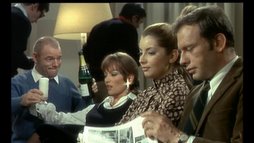
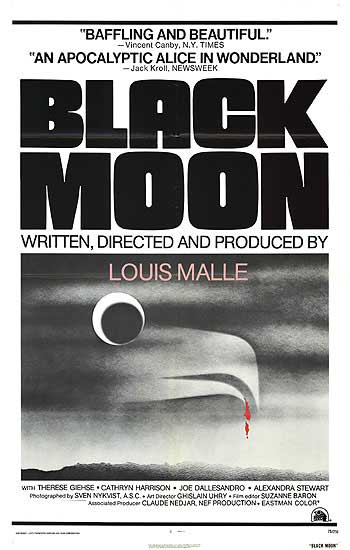
Black Moon (1975) - Louis Malle


The tagline for Malle's first English language feature, "An apocalyptic Alice in Wonderland", is as misleading as it is an accurate summary of everything the film stands for. It is apocalyptic, but only in the most rudimentary of senses with the setting of the film taking a large backward step here in favour of the actions and events that form the film's plot. Don't understand? Well, i've seen the film twice in the last couple of days and neither do I. Enigmatic, perhaps even profound, Malle eschews cinematic dogma with confidence and aplomb providing a film that's as baffling as it is absorbing, intoxicating and off-putting in equal measure.


Essentially, the film follows Lily. We don't know who she is but she's running (more specifically, driving) from something. A couple of external scenes show there is some kind of war of attrition going on between men and women. When she can get no further by car, she continues on foot first following a horseman(?) then a unicorn she spies. The unicorn, along with hens, pigs, sheep, a rat, an eagle, a millipede, snakes and a horse is just one of the film's animal images. The unicorn leads her to a house, in which she finds an old lady (Therese Giehse) who speaks in tongues to a large rat and occasionally talks to someone on a CB radio to describe what Lily is doing. Later, Lily (Cathryn Harrison) meets Lily (Joe Dallesandro) and his sister, Lily (Alexandra Stewart). Not much of importance really happens after this, except for Lily talking to the unicorn and playing Wagner on the piano, Lily (Joe) killing an eagle and Lily (Alex) breastfeeding the old lady.


Considering that anything we see could be as much fantasy for Lily as it is reality. critiquing the film becomes problematic. You can't say that the old woman wouldn't have set all those alarm clocks to go off at the same time, as much as you can't say unicorns don't exist/talk. Things happen and recur in the film that defy reason or logic that seem, somehow to have an importance or meaning. One could attach arbitrary meanings to individual scenes - the clocks being thrown from the window as a "time flies" gesture for instance, however i fell that ignores the spirit of the work. In writing the screenplay, Malle seems to have been aiming for some kind of cinematic equivalent to automatic writing where things happen and only afterwards with hindsight can we look at the results for some kind of meaning. At the same time though, it's a deeply personal film for the director who shot and edited it at his home in the Dordogne valley.


Taken as a kind of pubescent voyage of discovery, a lose form of linearity can be derived in the narrative. The film opens on the childish Lily running from the battle of the sexes, she witnesses it (women being slaughtered at a roadside) but doesn't take part, only picking up a gun much later in the film when a body is discovered in the house's garden. From her external flight, she enters the new world of the film's interior where she encounters siblings (Lily and Lily) who lead a pseudo-incestuous relationship, and the old lady who can be seen to embody a perverse notion of maternity. The old lady even plays on pubescent insecurities, laughing loudly at the Lily not having any bosom. The bastardised effeminacy seems to be a central current of the film, even extending to the bizarre [un]natural things we see outside.


The sight of naked children herding animals, and sheep flocking should not, prima facie be a threatening or foreboding event yet Lily runs franticly from the sheep and the sight of the children with the large pig and other animals seems to take something almost natural and make it part of a surreal nightmare. Actually, is it even a nightmare? Lily only seems to be aware of the war, but have no comprehension of the relationship between the old lady and the two Lilies; her actions inside the house are always instinctive, rushed frantic - yet on her first encounter she seems to know why the old lady attacks her (something about a watch?). Conversely, she screams when the old lady suffocates and - in a quick edit - we see a masked intruder strangling her. The old lady also says that Lily sees things and believes there's a war on; are we to take this as a dose of reality in Lily's fantastical nightmare, or is it just another bit of nonsense into the mélange.


Alice in Wonderland is unavoidable when talking about Black Moon. A feminine protagonist goes on a surreal journey encountering talking animals and a myriad of other characters; she is scared and trying desperately to get home. Here however, Alice only provides the roughest sense of the narrative structure - the linear journey that leads to these bizarre encounters, and also a sense that it shouldn't all (if ever) make sense. One big difference however, is that Lily doesn't wake up at the end. This is not an adaptation of Caroll, it's incorporates the structure to tell it's own story but pays as much attention to Wagner's Tristan und Isolde as it does to the literary work. There's an unmistakeable earthliness to the film, it's symbiosis with the land underpins everything - nature comes into man's world and vica versa, to the point that she can hold conversation with a unicorn. It's this sense of earthliness that allows the shots of animals to seem in context, and also lets myth intermingle with legend and folklore on the screen without question. It doesn't make much sense, but somehow it fits.


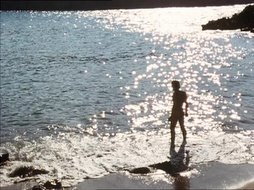
The most crucial question remains: is the film a success? Well, if by that we mean "does this film achieve the director's intentions" then i think the answer has to be yes (to some extent). The director always insisted its inclusion in retrospectives of his work and, to all intense purposes, was proud of the finished product despite the box office flop it became (and then there's the fact that Malle created a shorter, 1 hour cut of the film which he was also happy with). Financially, it was a flop arriving to very mixed reactions in the arthouse crowd but is it an artistic success of merit? I have to say that personally, i found it impossibly dull. The long, long periods of time without any dialogue whatsoever were often all too mind-numbing. For most of the film, very little happens at all. There are events but they can at best be sporadic; i can see it would be very easy to fall asleep during the film. This was shot by Bergman's cinematographer, Sven Nykvist yet it looks so dull - this at least was an artistic decision to only shoot the film when it was overcast (and when it was sunny shoot the interiors); Malle wanted it to look flat, opaque, without shadow, a film shot at an undefined time of day: a dawn or dusk of man/woman.


Saying the outside is dull, ignores the frankly brilliant interior shots - especially those lit by fire or candlelight (something Nykvist has excelled at in his career) that brought to mind works like Jarman's The Tempest for it's hauntingly romantic interiors. The performances are the measure of restraint, glances and shifts in posture filling in for the lack of dialogue, the actors erotic in their androgyny. It's so odd: a film that seems to put the audience at such a distance then, in a moment of brilliance, sucks you inexorably into the narrative intellectually and emotionally - for me the scene in the film that makes it all worth it is the one when Lily plays piano for the children. Out of the lethargic ordinariness of the film, rises like a phoenix from the ashes, a few minutes of captivating, sumptuous cinema that comes in waves reaching an incredible crescendo; it's literally worth watching for the one scene where - through the artistic medium - she escapes her surreal hell, and we can forgive Malle for making us wait so long to see what he can produce.

Overall: 6/10

Monday, 5 March 2007

Jubilee (1977) - Derek Jarman


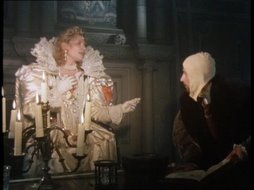
Jubilee was only Jarman's second feature length release, having already made a cult name for himself in the London community through short 8mm films. Already, off the success of Sebastiane, Jarman is carving out his uniquely british vision of society, culture and punk rhetoric. A far more linear story than The Last Of England, but similar in many visual and thematic ways, Jubilee follows Queen Elizabeth I on a voyage of discovery. The Queen, accompanied by John Dee, calls upon an angel (played by Adam Ant) to provide her with knowledge. This knowledge he provides her by way of a vision of England's future - a future unmistakebly 1970s, although it bares uncanny resemblances to Kubrick's Clockwork Orange dystopia.


In this future we see a group of punk artistes, visionaries or misguided souls - that is for the audience to make up their minds, but undeniably extraordinary. We watch Amyl Nitrate, Chaos, Crabs, Sphinx et al as they record music, discuss life and politics, and generally cause chaos. They live in what would generally be considered at best a squat, at worst squalor. There's an awful lot of bravado and pride on show in their actions and speeches but this isn't reflected in their derelict, cramped and messy environment.


It's to this clash of ideas and reality that the film turns, or at least - seems to suggest is present. We watch our protaonists, apparently happy in thier lives (or if not hapy then at least content) but there's always the pervading sense of something being array. As the film progresses it becomes clear this is not a celebration as the title may suggest, but some sort of mouring of society or perhaps a paen to the classical times of Elizabeth when things were 'better'. Via some interesting distractions, such as a Eurovision entry featuring Rule Brittania mixed with divebombing and Hitler rhetoric, the film introduces an eccentric record exectuive-come-monopolist, Cardinal Borgia Ginz - played by Jack Birkett at his very best indeed.


Ginz represents the key to the film. He gets the lionshare of the best lines that reveal amidst this punk dystopia he is making a fortune. He has bought everything he can in order to preserve and widen his power, he is in effect - exploiting the anarchic youth that he embraces with one hand and shuns with the other. It's him who runs the Eurovision contest, he runs the media which has a vice-like hold over the attention of the protagonists and he in a very Orwellian sense, is the protagonists' Big Brother. Whether anything should be read into the campness with which he is portrayed i am unsure, however what he stands for is unmistakeably important to the narrative thrust of Jarman's film. These young punks believe they are changing the world, they believe they have power and an ultimate sense of freedom following the abolition of law and order that is mentioned in the movie, but they dont. After all the strife, after the chaos that has ensued in persual of total freedom for the citizen, everyone is ultimately the capitalist's slave - and not just any capitalist but a media mogul. His infectious power, his midas touch sucks the vulnerable, weak and dissasociated into his grasp where he can use them as he likes. The ultra-cynical subtext is palpable, especially when the pseudo-philosophical ramblinsg of the punks get to their most rambling verbose sections. Jarman is not praising the punk movement; he is highlighting the irony in the punk reliance on mas media. He is detailing, quite cleverly i may add, how those who controlled the direction of the movement (as he saw it) were little removed from those punk sought to attack and ridicule.


The film finishes by nicely, and again - ironically, circling in on itself. Happiness is swept away with hope to be replaced by despair, all at the doing of the punks who are only acting out of what they feel is justice. Self destruction reigns supreme and, although the monologues may be pretentious tosh at times and the actinga bit wooden, the film does have enough merits to make for worthy viewing. From a nostalgic perspective it's interesting to see the likes of Toya Wilcox when she was still punk's darling, along with Adam Ant doing his best to ape David Bowie but the main source of intrigue and debate in this work is what it's saying about the era that spawned it. It's a far cry from the homoeroticism of Sebastiane, focusing on female empowerment and violent feminism for the mospart as the 2 gay characters are resigned to the periphery, that allows Jarman to focus on the social implications of the plot to a far greater degree - expanding on narrative themes far more competently than in any of his previous work.

Not Jarman's best film by any stretch, but one worth a look for anyone interested in British sociopolitical history. 7/10

Friday, 23 February 2007

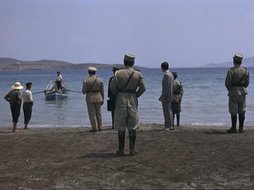
Meres Tou 36 (1972) - Theo Angelopoulos


Theo Angelopoulos is widely regarded as one of Greece's greatest cinematic exports, ever the darling of film critics and the festival circuit he has directed a great many classics of European cinema although this has not made him the most widely-seen of filmmakers. One reason is that he personally feels film is for cinema, that films should be seen on the big screen or not at all so the dvd releases of his best films have been hampered initially by his unwillingness to embrace the medium, then simply the matter of getting hold of good quality prints that can be restored and transfered to disc. So far New Star DVD, a Greek company, have released several of his films including The Travelling Players (a copy of which i own) which is now out of print, and some of his better known films like Landscape In The Mist and Ulysses' Gaze; their most recent release - and it should be mentioned here that Angelopoulos personally oversees all transfers of his films at New Star - is his acclaimed political drama-come-satire: Days Of 36.

In 1973,a year after the film was released, Ulrich Gregor interviewed the director for the International Forum des Junges Films, Berlin - an interview which has since been translated to English by Dan Fainaru. Although the interview deals largely with factual elements of the film such as the characters portrayed ("No doubt about [the audience recognising] Metexas")and their relation to 1970s Greek politics ("a time when the actions of the workers' parties were beginning to become effective"), Angelopoulos is particularly enlightening on the production and release of the film. He reveals the film was funded by a husband of a student of one of Theo's filmschool friends (a tenuous link i know) and that the script, daring as it was, was actually slipped past the Greek censors of the time adding the proviso, "to tell you the truth though, thee is quite a bit of difference between the original script and the film in its final form". Angelopoulos is however, unwilling to go into the post-release censorship issues encountred by the film pointing out, "...since i have the intention of continuing to make films in Greece. The main thing is that Days Of 36 was released". In finishing off the interview, when asked about state funding of the film Angelopoulos replies: "Not a penny, but they didn't forget to collect the taxes".

For me, the film is a bit of an oddity. I'm used to his more recent output, his use of long shots and neverending takes, the lack of editing and the prominence of locally-sourced music (courtesy of his regular composer Eleni Karaindrou), but Days Of 36 - part of his 'Historical Trilogy' along with The Travelling Players and The Hunters - is a very different entity indeed.

The film, losely based on real events, concerns a prisoner and a politician. In the opening scene a trade unionist is shot in some type of industrial yard. The shooter [we presume] is sent to prison where a homosexual politican (from the conservative right) visits him in his cell. The prisoner takes the politican hostage at gunpoint causing a political crisis in Greece - how do the government under the military control of Metaxas [leading a right wing military-lead coalition] end the situation in a way that causes the least embarrasment? As the hostage situation stagnates moves are made in the political arena to end the siege, leading finally to a rather down-hearted conclusion.

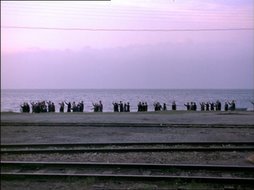
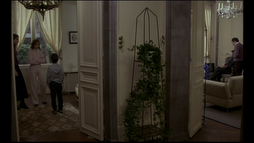
I said the film is different because stylistically, this is not what i have come to expect from Angelopoulos. The takes are just as long as in any of his other films (in some cases longer) and the use of elongated corridors to enhance the distinctly Brechtian sense of alienation is just as prevalent. However, from the very outset in the opening shot Angelopoulos employs the high-angled camera far more than in any of his other films i've had the pleasure of watching. Usually the camera is at eye level in his work, but in this film he constantly reverts to a quasi-Hitchockian high-angled shot from the corner of the room in which the action takes place. Added to this is the striking use of recessional depth, the likes of which one might associate more with Fassbinder - Angelopoulos talks of Antonioni and Godard as his major influences, "If you are looking for an affinity then it is more in the direction of Godard you should look... At the early stages there was also a touch of Antonioni", plus of admiration for Dreyer although he had only seen one of his films. Using the corridors stretching away from the camera Angelopoulos rarely employs the flatter, "planimetric" staging of his later work (for which people have described his films as like viewing a series of paintings) preferring instead to place his peoples in 3 dimensions using all levels and depths of the frame at once. For those more accustomed to his recent preference for stylish tracking shots that often draw attention to their technical proficiency as much as their aesthetic charm that aspect of his oevre is on display as much here as anywhere else - panning the camera through 2 or 3 complete revolutions goes almost unnoticed amidst the bleakly cinematography and captivating passiveness of the lead actors.

This stained cinematography, combined with the depth staging, lack of editing and sparse dialogue combine to give the film an at once enchanting appeal, counterbalanced by its remote, dramatic sense of alienation, its characters noticeably dislocated from reality. This dislocation is then counteracted by the recognisable faces of some of the politicians, and of the englishmen in the film, plus the sly satirical elements such as the conservative politician's effeminacy - producing a uinique effect of both pulling the audience into the film, and shying them away with the same gesture thus allowing for a more rigorous intellectual debate of the piece. The actors, restrained in their manerisms to the point of tension do what is required by their director - that is to say they do not give bad performances; many modern audiences will not like the distance invoked through their coldness and the lack of characterisation arising from the dearth of dialogue. Yet this is precisely the director's point.

With Days Of 36 he is evoking an atmosphere of political tension under the weight of a dictatorship as much as he is telling a specific story. The fact that a character is a politican is enough without going inot the depth of the character, as the audience in Thessaloniki in 1972 were bringing many preconceptions about the era to the film with them - they knew these people already without being told or shown more. As Angelopoulos says, "what i was looking for was a certain climate. A reign of terror" thus in creating this climate he poses far more questions than he answers. In depicting the "what" and the "when", in alienating the audience through the Brechtian dramatics, he then reengages his viewers on a more intellectual level through posing the question "why?" and by confronting the public with truths that the greek authorities may not have wanted to be widely known (such as the characters being shot by firing squad in the film, which is set at a time when hanging was the public method).

I cannot say this is Angelopoulos' best film as it lacks a lot of the ambition, the scope and, for lack of vocabulary, the "epic feel" of his masterpiece The Travelling Players. Likewise the story is far less charming than Eternity And A Day and perhaps, the politics are less relevant in contemporary Europe than the migration in The Suspended Step Of The Stork but this should not detract from its own merits. For a film made on the cheap, shot quickly largely with an amateur cast (at best he used semi-professional actors) that has only ever had limited distribution, the film examines and satirises an important period of Greek history that has shaped Greek culture ever since. Not a film for those unfamiliar with Angelopoulos' oevre - at least not the best introduction to this very specific mileu, though once you know what to expect and are prepared to give the film a couple of viewings for it to reveal it's nuances and more subtler artistic touches then one can really appreicate it for the important and influential piece of Greek cinema that it truly is.

8/10

Thursday, 18 January 2007

Amator (1979) - Krzysztof Kieslowski


Camera Buff is in many ways one of Kieslowski's most insular films in the way it portrays a Polish worker with Polish issues living and filming in Poland, none of which non-Polish viewers could seriously hope to associate with. However, Kieslowski is a master, and this film is a masterpiece, a uniquely fascinating exposition of the tribulations of artistry - to rank alongside Rivette's La Belle Noiseuse and Jarman's Caravaggio.

Filip Mosz (Jerzy Stuhr) is a quiet, content man living a lovely family life with his wife (Malgorzata Zabkowska), working a decent-if-menial job buying for a local factory... until that is his daughter is born. With the arrival of his daughter friends of the fmaily buy Mr Mosz a Russian film camera, with which he can film his daughter growing up. But in the small Polish community word spreads quickly - before long he is being funded by his employers to film a documentary of the factory's jubilee celebrations, although it soon becomes clear that no everyone is happy with Filip filming absolutely everything (particularly when he films actors being paid after the celebrations). The film is cut and re-edited by his employers but Filip gets an uncut copy to a film festival where it wins second prize. With the prize money he gains more popularity and, with the help of the expanding film club he created, begins making a documentary about a cripple that works in the factory. Though he is told not to he submits the film to a tv station contact who airs the film on national tv making Filip a local icon yet proving the final straw for his employers - a close friend is sacked and Filip is warned off future similar projects. By the film's climax, with conflicting information getting to him from a variety of sources, Filip finally realise there is only one way he can make an honest film...

The acting from the leads is superb - particularly from the leading pair, yet it is the superb screenplay that really forms the basis of this masterpiece. The story focuses on Filip's artistic battle between his own sense of artistic freedom conveying the truth to the people, and the opinions of the state/employer who wish to censor his work oout of recognition to convey a rather different message. This battel however is offset against th battles of his personal life. As Filip's interest in cinematography becomes an obsession his wife becomes ever more desperate, firstly for his affections, then simply to see her husband who has all-but left her for his artistry. Krzysztof Zanussi appears as himself part of the way through the film adding significant weight to the importance of Filip's work, yet the ultimate cynicism of the narrative leaves the artists seeming naïve in their youthful idealism. They want to portray the truth but without really understanding the underlying social, political and economic reasons for the degredation they wish to portray. The documentaries are shown, in the end, to be little more than anti-state propoganda guilty of as much short-sightedness as those official propoganda tapes, and it is this shockingly harsh realisation that leads Filip to his amazing conclusion, a conclusion in which he is not just a character; clearly it is Kieslowski we see starting his confession (thus alluding to the quasi-religious nature of art) straight to camera.

Oscillating between bitterly cynical social commentary and poignant personal dilemmas, filmed in the iconic handheld documentary style of the Pole's early work this film, in my mind, is undoubtedly a timeless masterpiece. It's events may be confined to a specific location and chronology, but what it has to say about art and censorship, about honesty and perceived motives in film - these are timelessly universal in scope. 9/10

Thursday, 4 January 2007

The Merchant Of Four Seasons (1972) - Rainer Werner Fassbinder


A director full of contradictions and tensions, and a film to match.

Hans leads a troubled life, stuck in a job that he dislikes, scorned upon by his family, confined to a loveless marriage. His wife prostitutes herself off to a guy on the street. In order to improve things Hans enlists some help, twist would have it that the "help" is the guy who recently slept with his wife. His wife, being the deviant cow she is soon sees to his career in pear-peddling before Hans's mate from the Foreign Legion, Harry, moves in. From there on things dont improve much for poor old Hans (though he does have a hot sister if you ask me - played by Hanna Schygulla).

The women in this film aren't nice, but dont mistake it for mysoginism - because it is far from it. Fassbinder paints a complex frescoe of humanity, one steeped in the complexities and jostling tensions of reality, one where there are no easy motivations or solutions, where everything remains a mystery. The bit i like the most however about Fassbinder's films is the way he shoots them. The aesthetic vibrancy combined with his unique staging schema produce an effect that juxtaposes clinical precision with raw erotic emotion in a way i haven't seen from any other director.

Fassbinder is a genius, and this film is great. 8/10